Is an All Access Clipart Pass Worth It?
You know that moment when you finally get a quiet hour to work – and you spend most of it hunting for a design that matches the product you actually want to make? The tumbler wrap is the wrong size, the clipart is cute but low-res, and the licence makes your head spin. If you’re building a small craft business (or a calm little side income between school runs), that friction adds up fast.
That’s exactly where an all access clipart pass can make sense. Not because it’s flashy, but because it changes the rhythm of your week: less searching, less second-guessing, more making and listing.
What an all access clipart pass actually is
An all access clipart pass is a value-based access model that gives you a large library of ready-to-use clipart (often alongside other formats) for one recurring fee or one larger upfront payment. Instead of buying one bundle for Halloween, another for bookish quotes, and a separate set of PNGs for teachers, you’re essentially paying for breadth – then pulling what you need when you need it.
For busy makers, the biggest shift is psychological as much as practical. When you’re paying per bundle, every idea becomes a mini cost-benefit debate. With a pass, you’re more likely to test products, follow trends quickly, and build out cohesive collections without feeling like every design decision needs a purchase approval.
That said, passes vary wildly. Some are truly “everything in the shop, ongoing”. Others are “everything in a specific category”. Some include commercial rights, some don’t. Some include tumbler wraps in standard sizes, others focus on clipart only. So the question isn’t “are passes good?” – it’s “is this pass good for the way you create and sell?”
Why passes appeal to sublimation and small-business sellers
If you only craft for yourself, buying individual designs can be perfectly sensible. But once you’re making to sell, you’re managing time, consistency, and momentum.
With sublimation especially, you need artwork that behaves nicely: clean edges, high resolution, transparent backgrounds when you need them, and themes that convert into finished products people actually buy. A pass helps because it reduces the two biggest bottlenecks for most part-time sellers: finding designs quickly and keeping your product range fresh.
It also supports the way real selling works. You don’t just make one tumbler. You make a set: a 20oz skinny tumbler, a 40oz, maybe an 11oz mug version, and if you’re clever, a matching glass can wrap and a listing mockup. When your library includes multiple formats and consistent sizing, you’re not reinventing the wheel for every product line.
When an all access clipart pass is a smart buy (and when it isn’t)
A pass is usually worth it when you’re producing regularly, you like having options, and you sell across seasons or niches. If you release new products weekly (or even just twice a month), a pass can be cheaper than buying bundles one by one.
It’s also a smart buy if you’re still figuring out your “thing”. Many mums start with one niche, then realise their customers respond more to another. One month it’s bookish designs, next month it’s faith-based, then suddenly teacher gifts are paying for your craft supplies. A pass gives you room to pivot without wasting money.
Where it may not be worth it is if you only ever make in one narrow style and you’re very particular about it. If your shop is strictly minimalist line art in two colours and the pass is packed with sassy sayings and full-colour characters, you’ll feel like you’re paying for a library you won’t use.
It also might not be the best choice if you’re buying a pass as a substitute for learning your production workflow. If you’re still struggling with pressing, colour settings, or file handling, more designs won’t fix that. In that phase, fewer, better-chosen files can be less overwhelming.
The three checks to do before you buy
Most disappointments with passes come down to mismatched expectations, not bad products. Before you commit, do three checks.
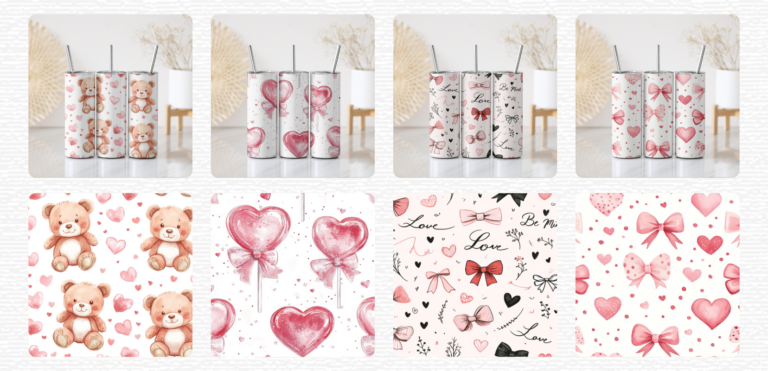
First, check the formats and sizes you actually need. If you mainly sell tumblers, you’ll want wrap sizes that match your blanks – common ones being 20oz, 40oz, 16oz glass cans, and 11oz mugs – plus PNGs that are truly print-ready for sublimation.
Second, check how new files are added. Some passes are a static library. Others are living libraries where new releases drop regularly. If trend speed matters to you (and on platforms like Etsy it often does), ongoing additions can be the difference between “nice value” and “this powers my business”.
Third, read the licensing in plain English. You’re looking for clarity: can you use the designs on physical products you sell? Can you use them in your own digital products? If there’s PLR involved, what are the boundaries around reselling, editing, and rebranding? A good pass doesn’t make you guess.
How a pass changes your week: practical workflows
The biggest win isn’t owning more clipart. It’s reducing the start-up cost of each product idea.
If you batch your work, a pass supports batch creation beautifully. You can pick a theme (say, autumn bookish) and pull coordinating elements: clipart, matching papers, wrap designs, and perhaps a few mockups. Then you create a small run of products or listings in one sitting rather than scattering your attention across ten different sources.
If you’re more of a “work in pockets of time” creator, the pass helps you stay productive in 20-minute bursts. Instead of scrolling and searching, you open your library, choose a design category, and get straight to resizing, printing, and pressing.
And if you sell seasonally, a pass reduces that familiar panic when you realise you’re late. Christmas, teacher gifts, Valentine’s – they come around quickly when you’re also managing family life. Having a library ready means you can start early without needing to buy a whole new set of files just to get going.
The trade-offs: choice overload and keeping things cohesive
Let’s be honest: “all access” can create a different problem – too many options.
If you tend to freeze when there’s lots to choose from, you’ll want a simple rule. For example: pick one niche per week, and within that niche choose one product type to focus on (mugs, then 20oz wraps, then glass cans). That way, the pass becomes a tool, not a distraction.
Cohesion matters too, especially if you sell online. A shop that looks like a random Pinterest board can still make sales, but it’s harder to build repeat customers. If you’re using a big library, you’ll want to curate. Stick to a handful of colour palettes, fonts, or illustration styles that feel like “you”, even if the library contains more variety.
Commercial use, PLR, and the confidence factor
Licensing is the part many makers avoid until it bites them. But it’s also where a good access model can be genuinely empowering.
If your goal is to sell finished physical products (pressed tumblers, mugs, stickers, journals), you need commercial-use permission that’s clear and sensible. If you want to build scalable digital income, PLR can be a separate lane – letting you repackage, rebrand, or build digital products from a base set of assets, within stated terms.
The confidence factor here is real. When you know your usage is allowed, you stop hesitating. You list faster, you market more consistently, and you don’t waste time rewriting product descriptions to dodge licence worries.
What to look for in a shop’s organisation
A pass is only as useful as the shop’s ability to help you find what you need quickly.
Look for category-driven discovery that matches how you think: by product type (clipart, sublimation PNGs, wraps, papers, mockups), by size (20oz, 40oz, 16oz glass can, 11oz mug), and by niche (bookish, faith, seasonal, funny/sassy, occupations, patriotic/political). When a library is organised around real making, you spend your time producing rather than filing.
This is one reason creators gravitate towards structured, craft-first shops such as That Digital Mum – it’s built for quick picking, downloading, and getting on with the job, especially if you’re juggling your business around family life.
So, is it worth it?
An all access clipart pass is worth it when you’re using it as a production tool, not a design collection. If it helps you make more products in less time, test niches without extra spend, and keep your listings fresh, it tends to pay for itself quickly.
If you’re on the fence, decide based on your next 30 days, not an abstract “someday”. If you can realistically see yourself creating and listing consistently this month, you’ll use the library. If you’re heading into a slower season or you’re already overwhelmed, you may be better choosing a smaller bundle and coming back to a pass when you’re ready to build momentum.
Your business doesn’t need more pressure. It needs calmer systems. And sometimes, the most supportive thing you can do is make it easier to start – even on the days when you only have an hour.
If you’re looking for a pass that’s built specifically for sublimation sellers and small digital product shops, our All Access Clipart & Tumbler Wrap Pass was designed with real workflow in mind.
Inside, you’re not just getting random graphics. You’re getting:
Ready-to-use sublimation PNGs
20oz skinny tumbler wraps
40oz tumbler wraps
16oz glass can wraps
11oz mug designs
Coordinated clipart and digital papers
Ongoing new releases added to the library
Everything is organised by product type and niche so you can find what you need quickly — whether you’re creating bookish gifts, teacher appreciation sets, faith-based designs, seasonal launches, or trending themes.
Most importantly, it’s built for commercial use on physical products. That means you can press, list, and sell with confidence — without second-guessing the licence every time you upload a new design.
The real value isn’t in “having access to everything.” It’s in what that access unlocks:
You can batch-create a full product line in one sitting.
You can test a new niche without buying three separate bundles.
You can respond to seasonal demand without scrambling.
You can build cohesive collections instead of one-off listings.
If you’re planning to create and list consistently over the next 30 days, the pass becomes a production system — not a design splurge.
And if you’re still building momentum? Start small. Choose a focused bundle, test your workflow, and come back to the pass when you’re ready to scale.
Either way, the goal is the same: fewer roadblocks between idea and listing.
Because when you only have an hour — between school runs, client work, or life — you don’t need more searching.
You need ready.
If that sounds like the season you’re in, you can explore the All Access Clipart & Tumbler Wrap Pass here and see exactly what’s included.